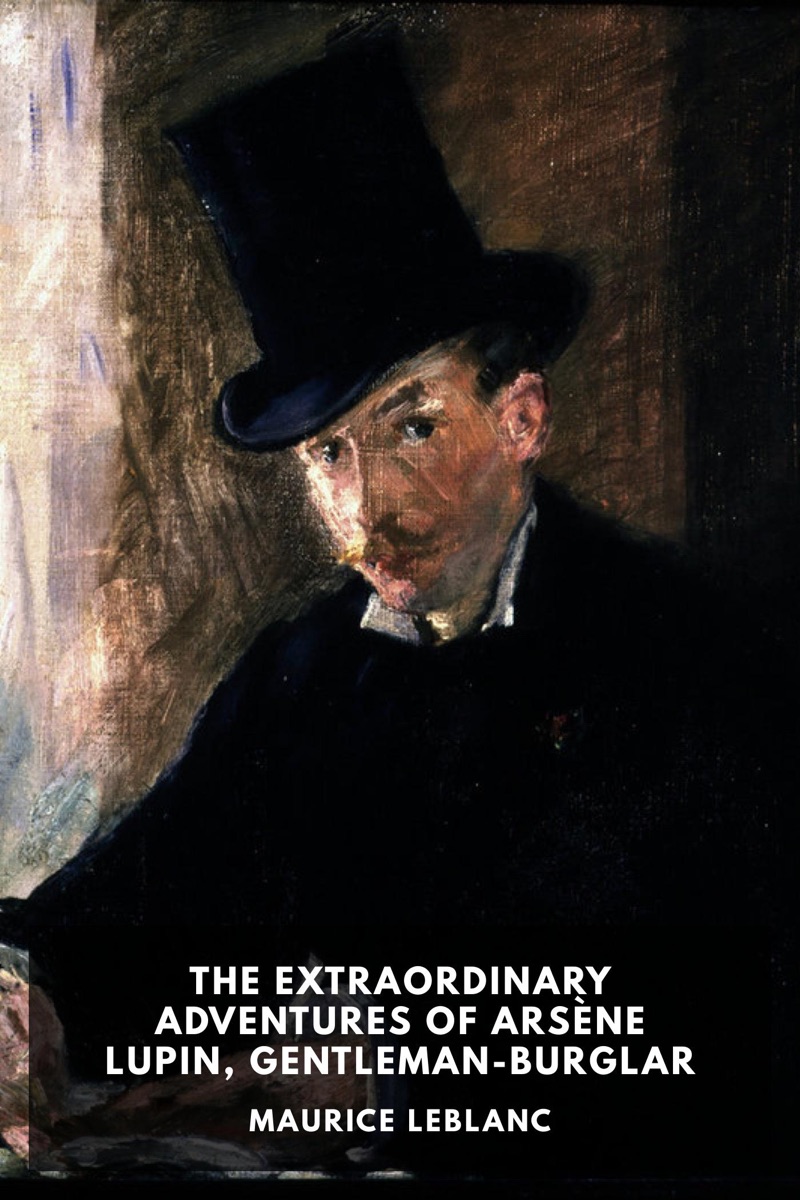
Why this book
This is no single tale but Maurice Leblanc's own collected chronicles of Arsene Lupin, serialized for a France hungry for a rogue clever enough to outwit its own finest detectives -- episodes so beloved they turned a wanted outlaw into the nation's most cherished gentleman, admired as much for wit as for daring.
The Story
Lupin boards the ocean liner La Provence under the alias Bernard d'Andrezy, all charm, polish, and easy laughter, catching the eye of a young American heiress, Nelly Underdown, as the great ship steams westward across the grey Atlantic toward New York, days of open sea stretching ahead of every first-class passenger aboard the crowded, glittering deck.
Midvoyage a wireless message crackles through the radio room: the notorious Arsene Lupin is aboard this very ship, travelling under a false name toward America. Every gentleman aboard becomes a suspect overnight, and the ship's once-peaceful crossing curdles into a floating courtroom thick with whispers, sideways glances, and quiet accusation among old friends.
Suspicion lands hardest on the hot-tempered passenger Rozaine, loudly protesting his own innocence to anyone who will listen, but it is Lupin himself who quietly palms Lady Jerland's jewels from her cabin one quiet evening, then hides the glittering haul where no search of the ship would ever think to look for it.
He slips the stolen gems into Nelly's own camera case while she is distracted on deck, trusting her unknowing hands to carry his prize safely past every searching eye and every customs officer on the crowded gangway once the great liner finally docks at New York harbor under a grey, overcast morning sky.
On the busy dock, veteran detective Ganimard studies the disembarking crowd face by face, then spots the old wound scarring Lupin's forearm -- the one small clue no disguise, no alias, and no charm can ever hide -- and seizes his old adversary at last, in full view of the astonished, murmuring crowd.
Realizing what she unknowingly carries, Nelly quietly drops the camera case into the harbor water; the jewels sink forever into the depths, lost to the police as much as to Lupin himself, her silence the one small kindness she offers the captured thief as he is led away in irons before the crowd.
In the household of the Count and Countess de Dreux-Soubise, a priceless diamond necklace vanishes overnight from a triple-locked cabinet, though every seal remains intact, every lock untouched, and no window or door shows the slightest sign of forced entry anywhere in the tightly sealed, carefully guarded room the family had always trusted completely.
Years pass with the theft still unsolved and half-forgotten, until a dinner guest, the composed Chevalier Floriani, quietly studies the room during dessert and notices a narrow transom window set high above the cabinet door, a small detail every trained investigator before him had simply overlooked entirely for years without exception.
Only a child, Floriani calmly explains to the stunned dinner table, could ever have squeezed through so small a gap -- slight enough to be dismissed by every grown investigator in the crowded room, agile enough to vanish afterward with the necklace and never once be suspected by anyone present that night at all.
Then Floriani lets the mask drop entirely before the astonished company: he is Raoul, the very same boy who slipped through that transom so many years ago, grown now into the gentleman-thief all of France has come to know, admire, and quietly fear alike under the name Arsene Lupin.
He returns the necklace whole and undamaged, closing the old debt not through capture, trial, or ransom but through a son's quiet, decades-late apology, and walks calmly out into the cool night air, unpunished and unpursued, leaving the astonished, grateful family standing behind him in stunned, lasting silence.
At the grand Chateau de Thibermesnil, a guest calling himself the painter Velmont raises his glass at dinner and vows aloud, smiling, that he will rob the house clean before the great Sherlock Holmes, already urgently summoned by the anxious host, ever manages to set foot inside its ancient stone walls at all.
That very night his gang empties the chateau through a hidden passage behind the tall library shelves, carrying off fine furniture, tapestries, family watches, and heirloom rings piece by careful piece before the sleeping household ever stirs or notices even a single faint sound in the dark, silent stone corridors below.
Among the horrified guests surveying the empty rooms stands Nelly Underdown, the very same heiress from the Provence crossing years before -- and in the confusion of the theft, she recognizes the thief's familiar face at once, unmistakably, despite every careful disguise he still quietly wears throughout that chaotic, unforgettable night.
Shamed before her, Lupin abandons the stolen goods entirely and orders their immediate return; by a forged military order, every last piece -- furniture, tapestries, rings, and pocket watches -- is quietly restored to its exact place in the chateau by three the following afternoon, precisely as he had earlier promised her.
On the terrace afterward, Nelly confronts him over a stolen ruby ring still gleaming plainly on his hand, and exposes him publicly before all the gathered guests; their brief, fragile romance ends there in that single terrible moment, in silence, sorrow, and quiet, lasting heartbreak for them both alike.
Sherlock Holmes reaches Thibermesnil only after the theft is already done, patiently deciphers a hidden cipher inside a stolen library book, and traces it to that very same secret passage -- finding also his own pocket watch, taken from him earlier on a forest path and mailed back to him afterward as pure, deliberate mockery.
What it means
He confesses, gently, that the theft was never for riches alone; his own mother, once wrongly accused and publicly shamed over that very same necklace long ago, deserved one quiet, decisive act of restitution paid in full before her early death, whatever the cost to himself and his own hard-won freedom.
Imprisoned after his arrest, Lupin still reaches Baron Cahorn's hidden treasures at Malaquis Castle through a hidden accomplice, ransoming them back for a fortune in gold; at his own trial soon after, a hired double named Baudru wears his face into the courtroom while the real Lupin quietly, calmly slips away free.
Robbed in turn by the brute Onfrey aboard a speeding night train, Lupin turns hunter and recovers his own stolen papers by force; posing later as the secret agent Daspry, he corners the blackmailing Varin brothers over stolen submarine plans and buys back France's secret for ten thousand francs, paid in cash.
Posing as a bogus secretary, he quietly empties the fraudulent Imberts' safe just before their own swindle collapses under scrutiny; and when the Countess d'Andillot is murdered for her prized black pearl, Lupin traces her guilty servant Danegre and claims the jewel quietly for himself alone, never for the law.
Every theft, across every single tale, is either undone or repaid entirely on his own terms; Lupin steals not merely to keep but to prove that cunning, charm, and honor can all share one restless hand -- a gentleman always first, and only ever, at most, a burglar a distant second.
🎧 Read-along audio is being prepared — text-only for now.