Why this book
Ollivant wrote this as the second volume of his Romance of Sussex, closing the trilogy against the real backdrop of the outbreak of the First World War — a domestic drama that quietly widens into a portrait of a whole nation stepping toward war.
The Story
Ruth Boam already carries a secret almost no one in town knows: her baby daughter Alice was fathered when Captain Royal, a man who should have protected her, forced himself on her instead. That single act of violence is the wound Ruth carries into every choice that follows, hidden from a world quick to judge a woman alone.
At Aldwoldston cathedral, Ruth marries steady, devoted Ernie Caspar, and Alice becomes his daughter in every way that matters. The wedding gives mother and child a name, a home, and a place in respectable society — a rescue Ruth had hardly dared to hope for after everything Captain Royal took from her.
Ernie's father, Edward Caspar, a blind poet with a warm and generous heart, welcomes Ruth into the family without hesitation. His wife Anne disapproves of the match and never fully hides it, which is why the newlyweds' happiness never quite settles every doubt under that roof.
Ernie's brother Alf, who once courted Ruth himself before losing her to Ernie, stays pointedly away from the wedding, stung and privately jealous. He keeps a quiet hand in family affairs anyway, secretly funding a cliffside hostel project — generous on the surface, but never without a purpose of his own.
That hostel belongs to Dr. and Mrs. Trupp, the family's steady benefactors, and to Colonel and Rachel Lewknor, who mean it as a genuine refuge for people in need. Alf's hidden money buys him quiet leverage over the project — a debt none of them yet realize they owe him.
Years pass gently after that: Susie, Jenny, and baby Ned join Alice in the nursery, and the Caspar house grows crowded, poor, and genuinely warm despite everything. It is the one real comfort the family has against the hardship steadily pressing in from every side of their small, struggling life.
Then Alf gets hold of a private letter — whose exactly is never made clear — that names Captain Royal as Alice's true father. Where family warmth had slowly grown, Alf now sees only a weapon, and he begins quietly deciding how and when to use what he knows.
With the rent overdue and gossip already circling the family's name, Alf presses Ruth hard, threatening to tell the whole town the truth about Alice's parentage unless she bends completely to his will. Proud, frightened, and utterly cornered, Ruth still refuses him outright.
When Ernie finally learns exactly how Alf has been tormenting his wife, fury overtakes him completely: he storms into Alf's garage and beats him badly. Police arrive and arrest Ernie on the spot, turning a private cruelty between brothers into an open public scandal.
At the hearing, the man pressing hardest for Ernie's punishment is Alf himself; the man defending him is Ernie. Captain Royal testifies against Ernie as though innocent of his own far greater crime, but Joe Burt backs Ernie's account instead, and the magistrates end by only cautioning both brothers before releasing them.
That witness, Joe Burt, is a Labour engineer known across town for fair dealing — and secretly, deeply in love with Ruth. His devotion goes unspoken for now, but it quietly shapes nearly everything he does for this struggling family from this point on.
When a stray cricket ball badly injures Little Alice one afternoon, it is Joe who scoops her up without hesitation and nurses her carefully through the worst of it. The act binds him closer to the whole household now, not only to Ruth herself.
A quiet triangle takes shape around Ruth without her ever seeking it: Ernie as husband, Alf as tormentor, Joe as gentle protector. She leans gratefully on Joe's steadiness even as she stays fiercely, stubbornly loyal to the marriage she fought so hard to build.
Hardship deepens further still: Ernie loses his job outright, and the rent falls badly, dangerously behind. The family clock and Ruth's one brooch — nearly everything of value they own — go one by one to the pawnshop, each loss a small, humiliating defeat.
Watching Ruth struggle under all this weight, Alf only tightens his grip instead of loosening it, certain that poverty alone will finally make her yield to him completely. Ruth's endurance, remarkably, keeps proving stronger than Alf's patience for cruelty.
Then a scandal-hungry clergyman, Reverend Spink, fabricates evidence of an earlier, undisclosed marriage, claiming it makes every one of Ruth's children illegitimate at a stroke. The lie races through the parish far faster than anyone can catch up to correct it.
Dr. Trupp and Colonel Lewknor go straight to the Registrar and prove, records in hand, that no such marriage ever took place. Ruth's own alibi — she was riding in Alf's car on that exact day — finishes the case completely: Spink's slander collapses in an instant.
Trupp then quietly buys out the very mortgage Alf secretly held over the Lewknors' hostel, stripping him of that last piece of leverage too. Defeated twice within a single season, Alf's grip over this family is finally, thoroughly broken.
With Alf's leverage gone, Mrs. Lewknor finally runs the hostel exactly as she always intended: a real refuge under the cliff for those who need one, free at last from Alf's hidden strings.
Beyond the Caspar house, the wider world turns steadily more dangerous — the Agadir crisis, army unrest in Ulster, the shockwaves of an assassination abroad. Colonel Lewknor organizes locally for national defense, while Joe Burt and a local minister, Mr. Geddes, campaign hard against militarism as committed, convinced pacifists.
Then Austria declares war, Germany mobilizes its armies, and Britain issues its ultimatum over Belgium's neutrality. Within a matter of days, the peace both camps had argued so fiercely over is simply gone: Britain is now, unmistakably, at war.
Joe Burt reverses himself completely and without warning: he delivers a rousing 'Follow Your Leader' speech and enlists at once, his pacifism burned away entirely by the moment. It is a total turn, and everyone who thought they knew him takes notice.
Yet Ernie, still an army reservist from his younger years, is recalled to his old regiment before Joe can even finish signing his own papers. So it is Ernie, not Joe, who must be the first to leave Ruth behind.
Before leaving, Ernie does something neither rival ever expected of him: he asks Joe directly, man to man, to watch over Ruth while he is away at war. The triangle resolves not through jealousy or confrontation but through Ernie's own trust — he chooses Joe himself.
Whether Ruth and Joe's bond becomes anything more once the war is over, the story does not yet say — for now, it is simply entrusted, not declared, and both of them seem to accept that.
The whole town gathers to see the soldiers off, and Ernie marches away with its cheers ringing behind him. The private storm inside one small, struggling house folds quietly now into the far larger storm breaking over the entire country.
Wartime conditions crush Alf's transport business outright almost overnight, his whole empire of leverage and unpaid rent collapsing down to nothing at all. He returns home so changed by ruin that even his own blind father fails to recognize his voice.
Captain Royal, too, is swept up into the war like every other man of fighting age. Ruth watches him pass close by her hiding place in the gorse, 'free once more' and departing without ever facing her — his secret, and his debt to her, still entirely unpaid.
Alone at last back at the Ambush, Ruth finally opens the letter Ernie left behind for her. It speaks of full reconciliation between them, of love for every one of their children including Alice, and of quiet confidence about the war ahead.
Whether Ernie will return home again to the Ambush and to Ruth is left, deliberately, an open question — the story ends not with his fate decided, but with hers, settled and at peace.
What it means
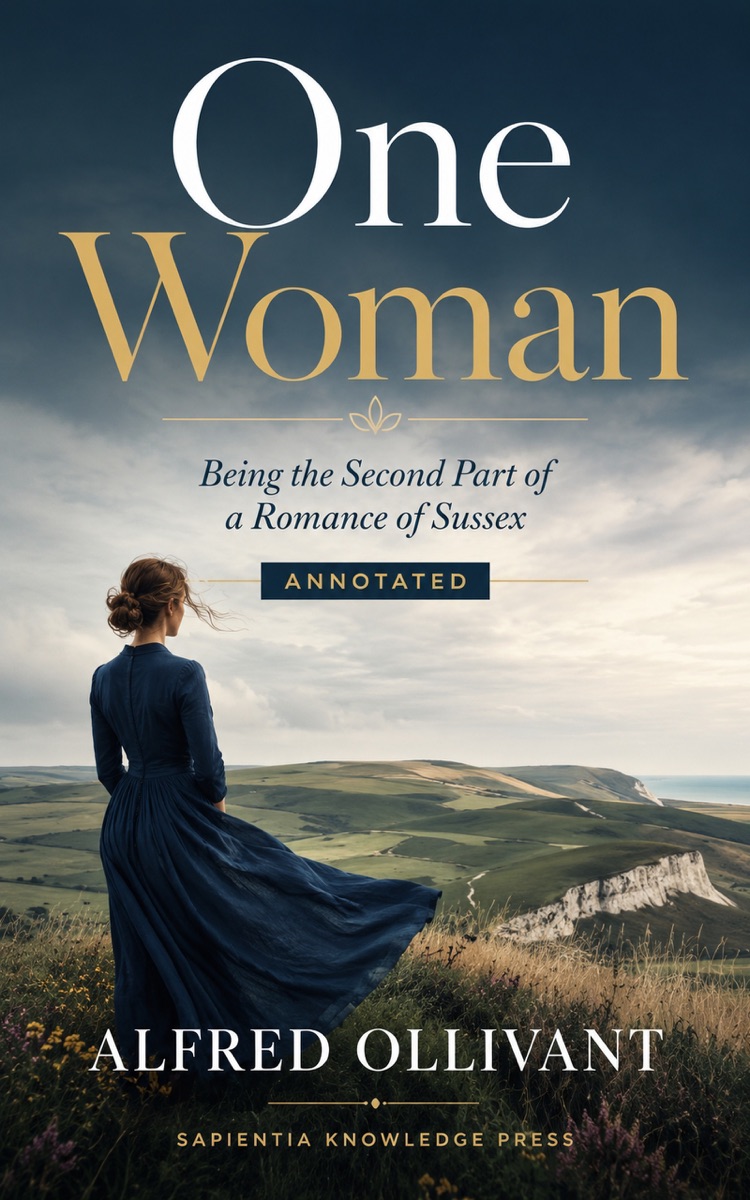
Much of Ruth's private world unfolds on the open Sussex downs, in the gorse and quiet air far from town gossip — a landscape that offers her, again and again, a kind of steadiness the crowded, judgmental town below never can.
Ernie and Ruth spend their very last night together at the Ambush, their secret gorse hideaway hidden on the open downs. There Ruth finally confesses one old, long-kept secret from their early courtship, and Ernie, at peace with her at last, forgives it completely.
Ruth realizes this second chapter of her marriage has ended in something the first one never gave her: not abandonment and disgrace, but real, hard-won peace. The book's quiet claim is that love proves itself not at a wedding but in how two people meet secrets, hardship, and even war side by side.
🎧 Read-along audio is being prepared — text-only for now.