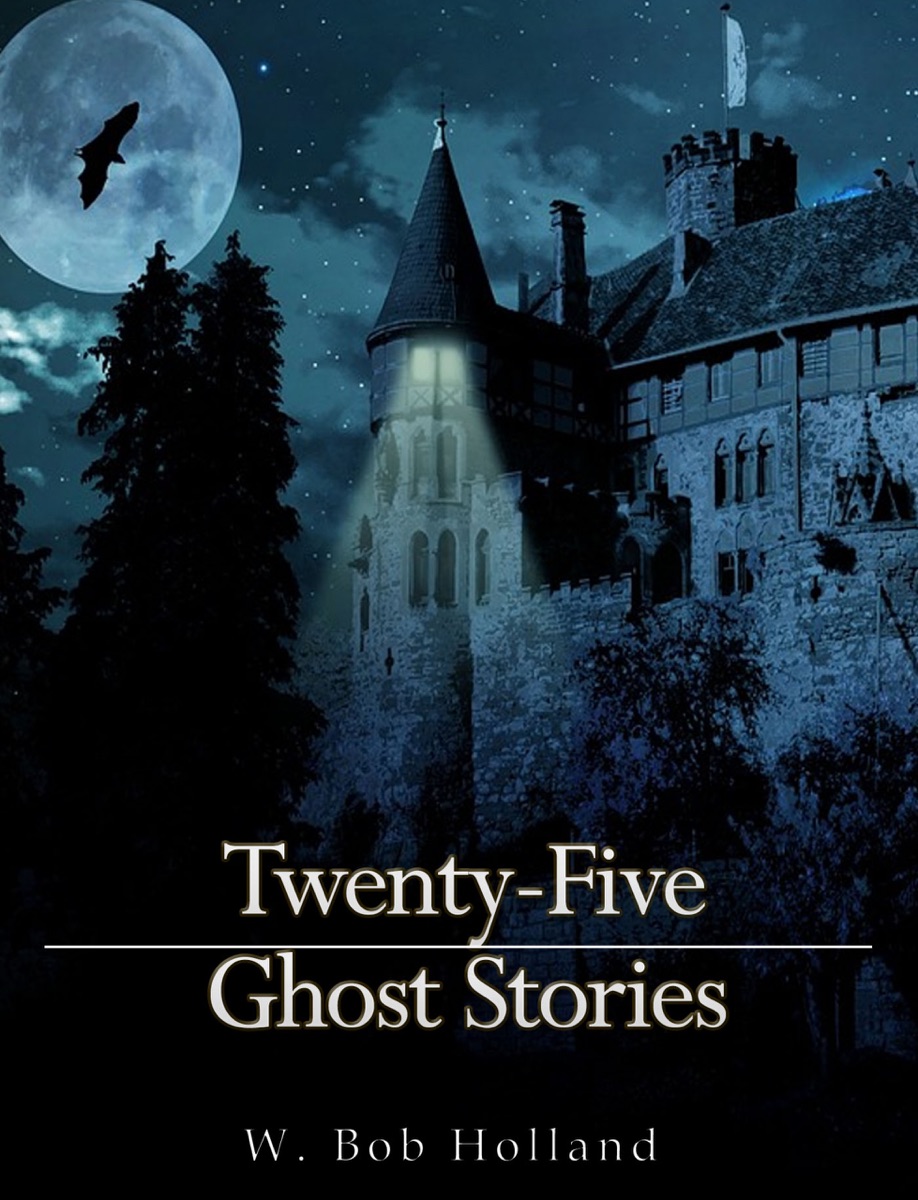
Why this book
This anthology was pieced together at the turn of the century, when American readers devoured ghost stories in newspapers and story-papers alike. Editors gathered the era's best-loved specters—some genuinely uncanny, some cleverly staged for profit—into one volume, because readers wanted proof that the restless dead might still have unfinished business among the living.
The Story
The first tale: The Black Cat. A narrator sinks deep into drink and cruelty, and in a fit of senseless rage kills his own cat, Pluto, who had once loved him best of all. Guilt does not simply leave him—it follows him quietly into the dark, waiting patiently for its moment to return.
He soon takes in a second cat, one-eyed like Pluto, marked with a pale shape resembling a gallows across its chest. The mark unnerves him more with every passing day, and one night, swinging an axe wildly at the creature in fury, he strikes his own wife dead instead of the cat.
Frightened but coldly calculating, he seals her body inside the cellar wall, brick by careful brick, certain he has hidden every trace of what he's done. The cat is nowhere to be seen, and for three full days the narrator sleeps easily, believing his secret is buried as deep as his wife.
When police search the house, he raps confidently on the very wall he built himself—and a long, wailing cry answers back from inside it. They tear the bricks open and find his wife's corpse, with the missing cat sitting calmly atop her head, one red eye gleaming in the dark cellar.
The cat, it turns out, had been walled in alive alongside its mistress—and its cries, not conscience, are what finally betrayed him. The narrator is seized on the spot; his own dark superstition, not the law, had quietly built the case that ultimately hangs him.
The Black Cat stands as the collection's darkest lesson: cruelty leaves a mark that outlives its victim, and a guilty man's own frayed nerves may condemn him faster than any witness ever could, long before the law arrives to ask its first hard question.
Now, a very different kind of haunting: Nancy Black's Ghost. Jeannette, a young widow, moves into a house long said to be haunted by Nancy Black, a woman dead for years. Rather than fleeing in fear, Jeannette waits—and one night, the ghost herself appears, calm, patient, and clearly purposeful, not cruel.
Nancy's ghost presses her cold fingers to Jeannette's open palm, and when she pulls away, faint crimson marks remain—proof, not injury, that this spirit is genuinely real. The ghost then leads her, step by careful step, toward a hidden space no living soul had ever once thought to search.
There, behind a false wall, Jeannette finds a small skeleton—Nancy's dead sister Lucy and her infant—hidden away long ago in secrecy and shame, along with money quietly left behind for their care. The ghost's true purpose was never fear, only overdue justice.
Jeannette gives Lucy and the infant a proper burial, and the haunting ends the moment the truth is honored. She takes the money Nancy left behind and does something remarkable with it—she turns the house into a shelter for destitute women with nowhere else to go.
Of all twenty-five ghosts in this book, Nancy Black asks for the least and gives back the most: not vengeance, but remembrance—and Jeannette, once a frightened widow, becomes the quiet protector of women just as forgotten as Nancy herself once was.
One tale leaves the realm of hauntings for outright time-travel: Valley Forge. John Reilly, cycling past the old encampment grounds, stops to drink from a strange bottle he finds by the road. The moment it touches his lips, the modern world dissolves around him entirely.
Reilly finds himself seized by ragged, freezing soldiers in the winter camp of 1777, and marched before General Washington himself. No one believes his story of bicycles and distant decades—to them, he is simply a strange trespasser who must prove his worth or be driven out.
A soldier named Harry challenges him boldly to a race—bicycle against horse—and the whole camp gathers round to watch, half in deep suspicion, half in open wonder. Reilly, with nothing left to lose but his own freedom, pedals harder than he has ever pedaled in his entire life.
He wins the race clean, and the soldiers' suspicion turns to astonishment and respect. In that instant, the camp, the cold, the ragged uniforms all vanish—and Reilly finds himself alone again at the ruined farmhouse, bottle empty in his hand, 1777 gone as if it never was.
Valley Forge is the anthology's boldest swing: no murder, no fraud, no open grave—only a living man proving himself worthy in front of history's own ghosts, and returning home changed by an encounter no one around him will ever quite believe happened.
What it means
The rest of the collection sweeps just as wide. The Flayed Hand curses whoever keeps a dead sorcerer's severed hand as a curio; Vengeance of a Tree lets an oak itself crush a murderer who escaped justice; the Parlor-Car Ghost is bound to unfinished business selling denim cloth.
The Ghost of Buckstown Inn turns out to be a living woman staging fake treasure hunts for profit; Light Toed Jim's supposed phantom is proven, years later, to have simply survived; Mrs. Davenport's Ghost exposes a fraudulent medium when his murdered wife's real spirit finally appears.
A phantom woman is found strangled at her window, twice; a phantom hag tears five holes in a cloak as an omen of death; a woman buried alive in From the Tomb rises to horrify the very valet who robbed her grave; Kit's Treasure leads a dead man's son to buried gold.
A skater's ghost saves a man from an icy crevasse the same night she dies of fever; a chained rat, not a specter, haunts the Craig House; an escaped lunatic, not a ghost, terrorizes a household from the loft; a chalk-pit skeleton forces a confession of a poacher's hidden murder.
Miss James follows a ghost to a hidden treasure chamber in Mexico and is rewarded with a fine dinner service; a wreckmaster who robbed drowned bodies is haunted by a mourning woman at a mansion window; the Mohawk's crew all meet the same misfit ghost; a rat, again, explains the vanishing goods at the Howards' cottage.
Beneath all twenty-five hauntings runs one steady conviction: the dead do not linger merely to frighten the innocent—they linger because something true was buried, owed, or denied, and a ghost is simply the truth finding its way stubbornly back into the light, one way or another.
🎧 Read-along audio is being prepared — text-only for now.